
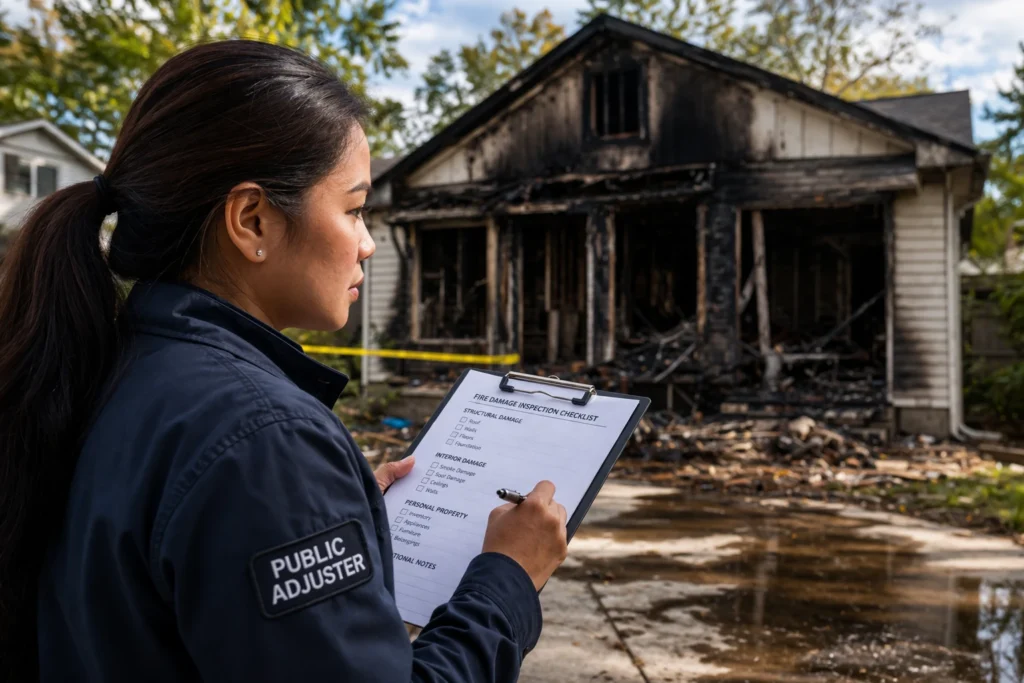
A fire can change everything in a matter of minutes. One moment, your home feels safe. The next, you’re dealing with smoke, damage, and uncertainty. This is exactly where a fire insurance adjuster steps in and understanding their role can make a serious difference in how your claim turns out.
If you’re a homeowner in Cedar Park, this isn’t just theory. Electrical issues, dry weather, and everyday risks make fire damage a real concern. And when it happens, the decisions you make early can shape your financial recovery for months or years. Let’s break it down clearly, without fluff. Because after a loss, clarity is everything.
The Short Answer: What Is a Fire Insurance Adjuster?
A fire insurance adjuster is a professional who evaluates fire damage, reviews your insurance policy, and helps determine how much money you should receive from your claim.
But here’s the key difference most people miss:
Not all adjusters work for you. Some represent the insurance company. Others represent you. That distinction? It can directly impact your payout.
Types of Fire Insurance Adjusters Explained
Not all adjusters play the same role. Understanding the difference is critical before you trust anyone with your claim.
Insurance Company Adjuster
- Employed directly by your insurance provider
- Reviews your claim on behalf of the company
- Goal: settle the claim but also control costs
They’re not your enemy. But they’re not your advocate either.
Independent Adjuster
- Contracted by insurance companies
- Often brought in during large-scale disasters
- Handles high volumes of claims quickly
These adjusters work fast. Sometimes too fast. Details can get missed.
Public Adjuster
- Works exclusively for you, the policyholder
- Focused on maximizing your claim payout
- Handles documentation, valuation, and negotiation
This is where things shift. A public fire insurance adjuster is your representative someone who knows how to push back when needed.
What Does a Fire Insurance Adjuster Actually Do?
This is where things get practical. A skilled fire insurance adjuster doesn’t just “inspect damage.” They build your case.
Damage Assessment
They examine:
- Structural damage (walls, roofing, foundation)
- Smoke and soot impact
- Hidden damage behind walls or ceilings
A quick glance won’t cut it. Fires create layered damage that isn’t always visible.
Documentation and Evidence Gathering
This step is everything.
Expect:
- Detailed photo documentation
- Itemized lists of damaged belongings
- Repair and replacement estimates
Without proper documentation, your claim weakens. Simple as that.
Policy Review
Insurance policies are dense. And most homeowners don’t read them until it’s too late.
An experienced adjuster will:
- Identify coverage limits
- Flag exclusions
- Interpret complex terms in plain language
This is where missed opportunities often happen.
Claim Valuation
Here’s where numbers come into play.
| Valuation Type | What It Means | Why It Matters |
| Actual Cash Value | Depreciated value | Lower payout |
| Replacement Cost | Full replacement value | Higher payout |
A strong fire insurance adjuster pushes for the valuation that benefits you not just what’s easiest.
Negotiation with Insurance Companies
This is not a one-email process.
It involves:
- Back-and-forth discussions
- Revised estimates
- Justifying every dollar
And yes it can get frustrating. That’s why having someone experienced on your side matters.
Why Fire Insurance Claims Are So Complex
Fire claims are rarely straightforward. In fact, they’re some of the most complicated insurance claims out there.
Here’s why:
- Smoke damage spreads further than flames
- Water damage from firefighting adds another layer
- Structural damage may not be immediately visible
- Local building codes can increase repair costs
Interestingly, complex systems whether in construction or science often behave unpredictably under stress, much like what’s studied in nonlinear dynamics. Fire damage follows a similar pattern, spreading in ways that are not always obvious at first glance.
And then there’s the emotional side. You’re not just dealing with paperwork you’re dealing with loss. That combination makes it easy to overlook critical details.
When Should You Call a Fire Insurance Adjuster?
Timing matters more than most people realize.
You should consider calling a fire insurance adjuster:
- Immediately after the fire
- Before giving detailed statements to your insurer
- When the damage is significant
- If the claim feels overwhelming
- When you receive a low settlement offer
The earlier you bring in expertise, the more control you maintain.
The Step-by-Step Fire Insurance Claim Process
Let’s simplify the process so you know what to expect.
Step 1: Emergency Response and Safety
- Secure the property
- Prevent further damage
- Ensure everyone is safe
Step 2: Notify Your Insurance Company
- File your claim quickly
- Provide initial details
Step 3: Initial Inspection
- Insurance company sends their adjuster
- Basic evaluation begins
Step 4: Documentation and Inventory
- List damaged items
- Gather proof of ownership
This step can take time. Don’t rush it.
Step 5: Estimate and Review
- Insurance provides an initial offer
- Often lower than expected
Step 6: Negotiation and Settlement
- Adjustments are made
- Final payout is agreed upon
This is where having a skilled fire insurance adjuster can significantly impact the outcome.
Common Mistakes Homeowners Make After a Fire
These mistakes are more common than you’d think and they can cost thousands.
- Accepting the first offer too quickly
- Throwing away damaged items before documentation
- Underestimating smoke or water damage
- Not reading the policy carefully
- Trying to handle everything alone
One mistake is manageable. Several? That’s when claims fall apart.
How a Public Adjuster Helps Maximize Your Claim
Let’s get real. Insurance companies handle claims every day. Most homeowners don’t. A public fire insurance adjuster helps level that imbalance.
Here’s how:
1. Stronger Documentation
They know what insurers look for and what they question.
2. More Accurate Valuations
They push for realistic replacement costs, not minimized estimates.
3. Strategic Negotiation
They don’t accept low offers without pushback.
4. Reduced Stress
You focus on recovery. They handle the claim.
A Quick Scenario
A homeowner initially receives a $45,000 settlement.
After working with a public adjuster? The claim increases to $85,000.
That difference isn’t luck. It’s expertise.
What to Look for in a Fire Insurance Adjuster in Cedar Park
Not all adjusters are equal. Choosing the right one matters.
Look for:
- Proper licensing in Texas
- Experience with fire-related claims
- Clear, transparent fees
- Strong communication skills
- Proven results
And trust your instincts. If something feels off, it probably is.
Costs and Fees: How Fire Insurance Adjusters Get Paid
Most public adjusters work on a contingency basis.
That means:
- No upfront cost
- They get paid a percentage of your settlement
- If you don’t get paid, they don’t get paid
This structure aligns incentives. They succeed when you do.
Fire Risks Unique to Cedar Park Homes
Cedar Park isn’t immune to fire risks. In fact, certain local factors increase exposure.
Common risks include:
- Electrical system overloads
- High summer temperatures
- Kitchen-related fires
- Aging wiring in older homes
Being aware of these risks helps you prepare and ensures your coverage is adequate.
A Real-World Scenario: When Expertise Changed Everything
Let’s paint a picture. A family experiences a kitchen fire. Damage spreads through smoke into multiple rooms. The insurance company estimates $60,000 in repairs. It seems reasonable. At first.
Then a public fire insurance adjuster steps in:
- Identifies hidden smoke damage
- Accounts for full content replacement
- Includes code upgrade requirements
Final settlement? Over $110,000. That’s not a small gap. That’s a life-changing difference.
Final Thoughts: Is Hiring a Fire Insurance Adjuster Worth It?
Short answer? Often, yes.
Especially when:
- The damage is extensive
- The claim feels overwhelming
- The initial offer seems low
A fire insurance adjuster doesn’t just process paperwork. They protect your financial recovery. And after a fire, that protection matters more than ever.
FAQs
A fire insurance adjuster evaluates fire damage, reviews your policy, and determines how much your insurance company should pay for your claim.
No, a fire insurance adjuster can work for the insurance company, while a public adjuster specifically represents you, the policyholder.
You should consider hiring one immediately after a fire, especially before accepting any settlement or if the damage is significant.
Most public fire insurance adjusters work on a contingency fee, meaning they take a percentage of your final claim settlement.
Yes, an experienced adjuster can often identify overlooked damages and negotiate for a higher settlement.
No, you are not required to accept the initial offer and can negotiate or seek professional help to review it.
You typically need photos of the damage, an inventory of lost items, receipts if available, and your insurance policy details.
It can take anywhere from a few weeks to several months, depending on the complexity of the damage and negotiations involved.
Avoid throwing away damaged items too soon, accepting low offers quickly, or failing to document all damages thoroughly.
In many cases, yes especially for large or complex claims where professional guidance can lead to a significantly better outcome.